
Law is woven into almost every decision a business makes. For a foreign company in Turkmenistan, the question that matters is whether its counsel is part of that decision, rather than whether the question at hand happens to be a legal one.
Legal support takes its shape from the business it serves. Unlike a supply of equipment or a translation, it cannot be drawn within fixed borders, because law does not confine itself to a list of matters; it surfaces in almost every part of how a company operates.
Law is almost always present in a given decision. What matters is how that presence is managed, and by whom.
It is at this point that a lawyer is distinguished from a legal expert. A legal expert answers the question put to them: what the law provides, whether a clause holds, which procedure applies. A lawyer works where real events part company with pure law, where a question arrives without being labelled legal at all and turns out to have a legal side regardless.
Law runs through the whole company
Good counsel is therefore defined by its ability to manage and coordinate law across the company, and not by knowledge of the rules alone. It recognises where a legal consequence will follow from an ordinary operational step, and ensures that the consequence is handled as part of that step.
This ability rests first on experience: knowing what one is doing, and knowing how support should be given, when, in what form and to whom. It rests equally on involvement.
Counsel who engages only with questions that present themselves as purely legal will miss most of the places where law actually operates. Good counsel is involved in everything connected to law in the company it supports, and not only in law in its pure form.
Inside management, moving with it
In the conditions of Turkmenistan, that involvement extends into management itself. A well-rounded lawyer should take part in the management of a company and move together with it. Management, for its part, should act together with its counsel, and should not wish to act separately from it.
When the lawyer is aware of the whole course of the business, the process runs soundly: risks are prevented, and the necessary measures are taken in time.
Counsel of this kind is part of how a matter takes shape, rather than a resource called upon once it already has. Its work is continuously intertwined with management decisions, and legal considerations are carried inside those decisions instead of being attached to them afterwards.
Principles first
A role of this breadth requires a firm foundation. Legal support of this kind begins from principles and branches out from them. The principles come first because the work itself cannot be fully listed in advance; they are what holds it together when a question arrives that no list anticipated.
The foundation of the relationship · 01–03
01 Trust — A company shares with its counsel what it shares with no one outside it. Everything else rests on that trust being well placed.
02 Confidentiality — What counsel learns about a company's affairs stays within the relationship. Taking part in management means seeing a great deal; discretion is the condition of it.
03 Commitment — Counsel's commitment to the client's interests is constant and extends across the whole relationship, rather than being renewed matter by matter.
How counsel works · 04–09
04 Ownership — Counsel treats the client's legal affairs as its own to manage. A matter that reaches it is carried through.
05 Transparency — The client knows what its counsel is doing, why, and where each matter stands.
06 Initiative — Counsel acts where the client's interests call for it, without waiting to be asked.
07 Prevention — Counsel sees a problem before it arises. Initiative is acting; prevention is recognising the risk early enough that there is nothing to repair.
08 A complete view — Counsel follows the whole course of the company. Counsel who sees only the question in front of them cannot see what it touches.
09 Taking responsibility — Counsel stands behind its advice and its work, and answers for them.
The service itself · 10–13
10 Flexibility — The support takes the shape of the client's needs. It is not a fixed menu.
11 Continuity — The service is continuous. It does not stop at a set hour, and there is no point at which counsel says it no longer serves.
12 Stability — The approach and the standard of the work stay the same over time, whatever the size of the matter. The client can rely on it.
13 Always reachable — When the client needs counsel, counsel can be reached.
For foreign companies in Turkmenistan
For a foreign company operating in Turkmenistan, these principles carry a further dimension. Its decision-makers may sit abroad; its documents move between languages; its structure must satisfy local requirements and the expectations of a head office elsewhere. It needs counsel able to stand between the two.
Our practice is built for that position. Across the life of a foreign company's presence, from its establishment and registration to its internal governance, its people, its contracts, its assets, its dealings with institutions and its reporting to head office, we have the capacity to meet its needs from a single point, with one team that already knows the history of every matter it touches.
A team, not a specialist
Legal issues arise in every area of a company's operation, and a law firm serving a company in this way must therefore hold specialist lawyers in every area of its own.
Working with a well-equipped law firm thus becomes, in every sense, far more essential than working with a lawyer who specialises in particular fields. The team has to be ready, at all times, for every kind of scenario.
Conclusion
In serving corporate clients, a law firm should be intertwined with management at all times, command the whole of the company's operations, and be heard and consulted on management decisions. It should not be an adviser at a distance, one that steps in only once a problem has surfaced.
It should stand by the company in its difficult moments, take on the company's work as though it were its own, and carry that responsibility steadily, over many years.
About the author
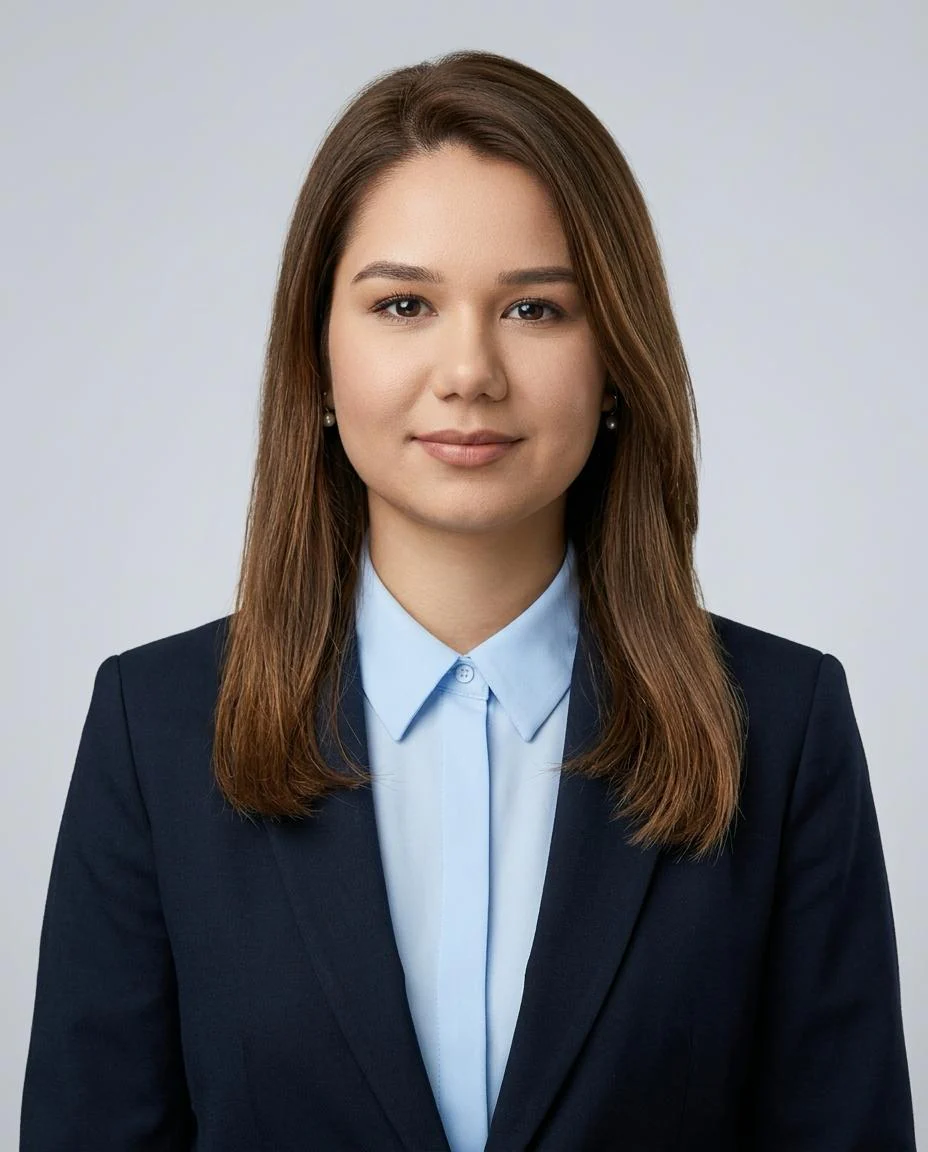
Bagdagul Temimova
A licensed lawyer advising clients on corporate, commercial, energy, environmental and insurance law, with experience in legal consultancy for international organizations.
View profile